Water Management training course · Yerevan · 11 to 16 September 2026
Armenia's water
Resources, use, challenges, and what AI can add



Resources
The water tower of the South Caucasus
of renewable water a year. More than half of it leaves the country in rivers.
Sources: FAO AQUASTAT country factsheet (Armenia); World Bank, Armenia water security assessment, 2024 (per-person figure for 2022); UNDP/GEF 2006 via Water Action Hub.
Resources
Upstream country
Every river here ends in someone else's country. Georgia has three times more water; Azerbaijan, downstream, has less per person.
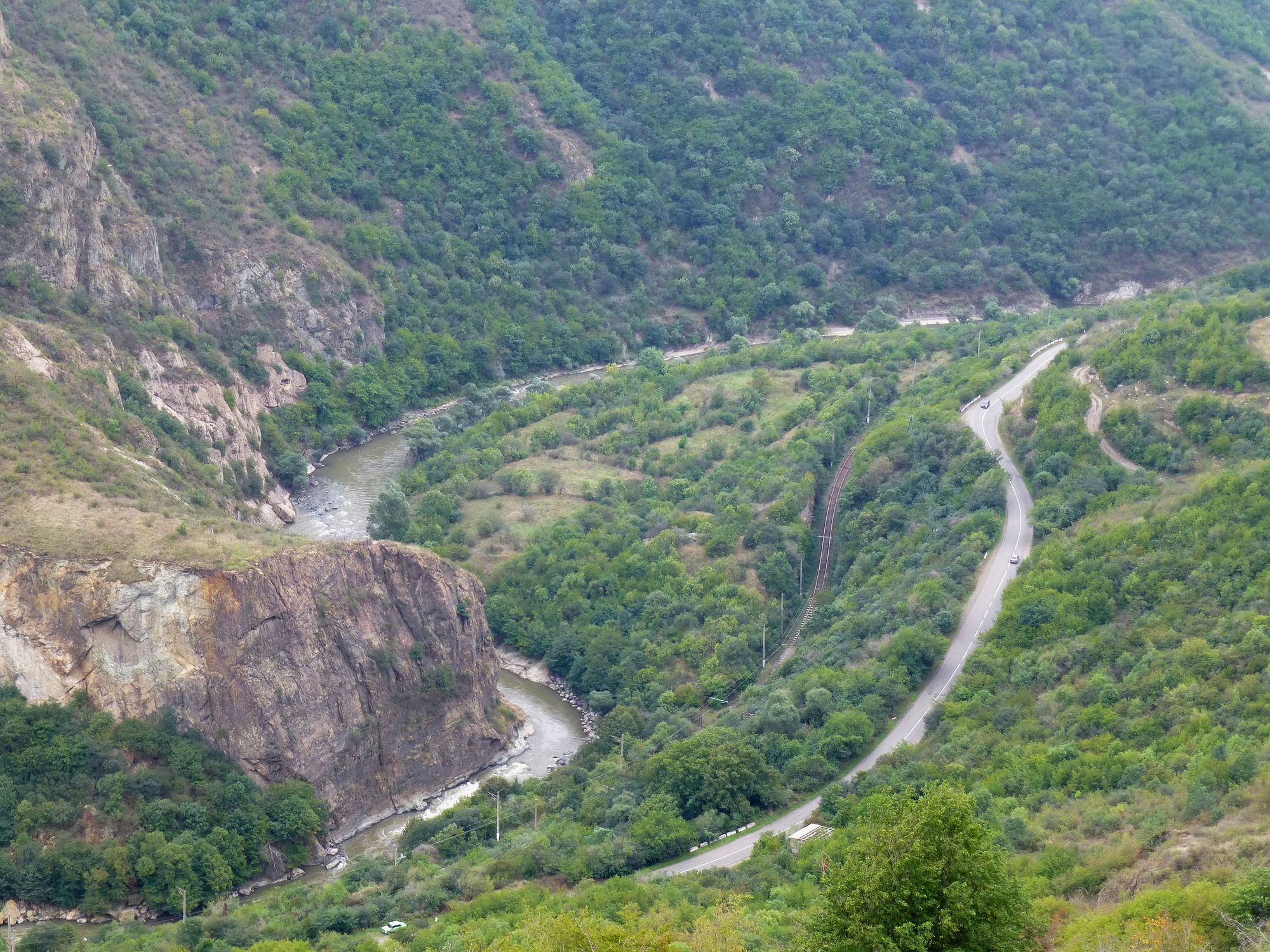
Debed canyon, Lori. Source: EVN Report, 2024 (hydro-ecologist Arevik Hovsepyan); FAO AQUASTAT.
Lake Sevan
Twenty metres lost, five regained
- 1,416 to 1,242 km² of surface
- 13 m to 3 m water transparency
- 50 times fewer fish
- 46 cm rise in the first half of 2026, the fastest since 1993
Sources: Wikipedia, Lake Sevan (1933 baseline); Water Action Hub (19 m fall by 1972); EVN Report, The ups and downs of Lake Sevan; GRID-Arendal; Lakepedia; Armenpress, 17 June 2026.
Lake Sevan
Water in, water out
Sources: Wikipedia, Lake Sevan; Water Action Hub country profile; EVN Report, 2024 (Ministry of Territorial Administration and Infrastructure data; government decision of 14 June 2024).
Lake Sevan
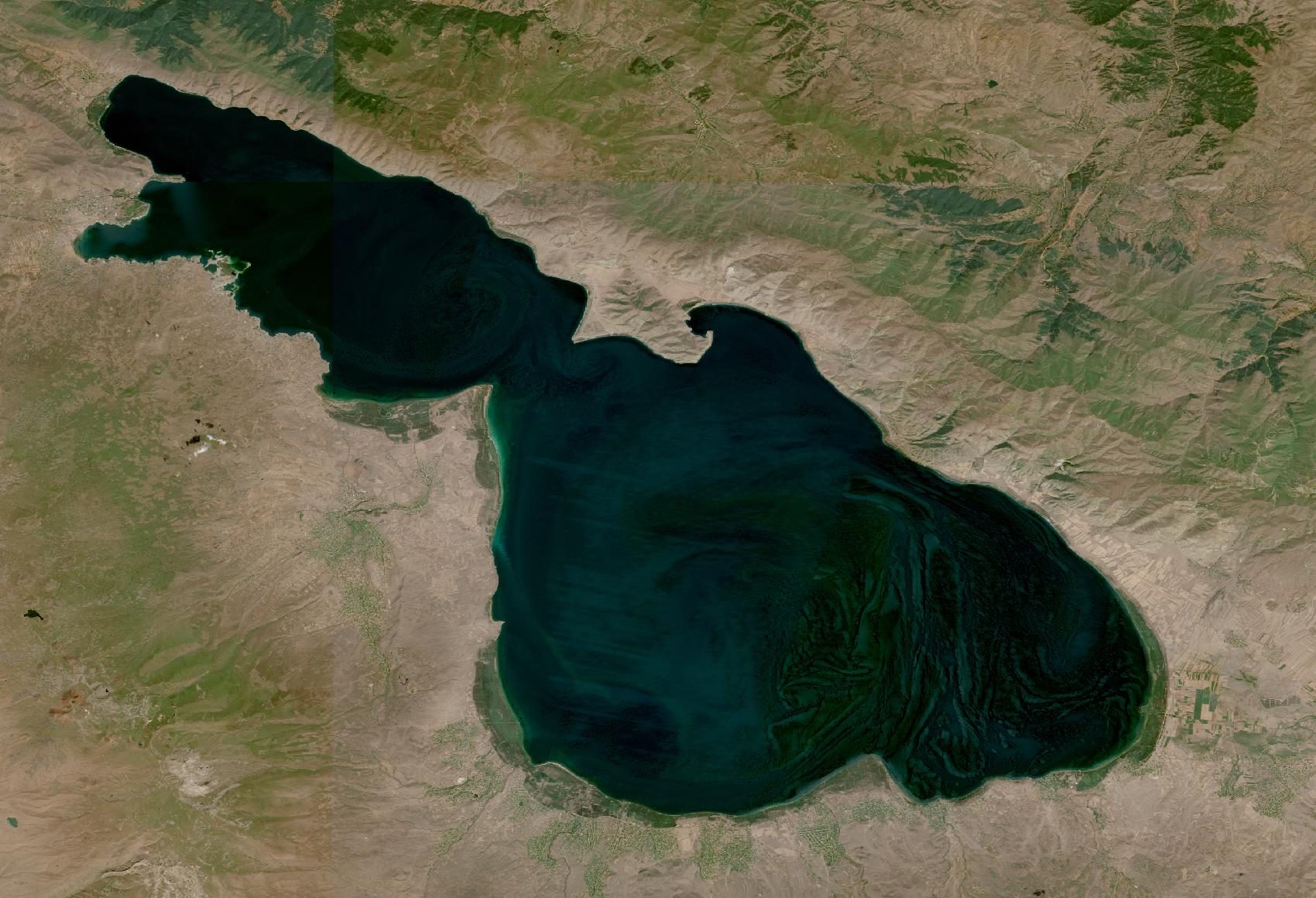
Blooms every summer since 2018
Cyanobacteria swirls seen from orbit on 18 August 2025. The first documented bloom was in 1964.
Sources: EVN Report, The ups and downs of Lake Sevan; Heege et al., Remote Sensing, 2024.
Lake Sevan
Two short films
What Is Happening to Lake Sevan? American University of Armenia
Can Lake Sevan be saved? CivilNet
Films play from YouTube. Both channels publish in English.
Groundwater
The aquifer under the fish farms
- 77% of the valley's water goes to fish farms
- 135 wells found dead in 2016
- 70% of irrigation now needs pumps
- 38% of arable land in Armavir province lies fallow
Sources: USAID ASPIRED story map (1983 to 2016 survey); EVN Report, 2017 (1984 limit, abstraction 2013 to 2016); CivilNet, October 2024 (EcoLur data, fallow land, pumping).
Groundwater
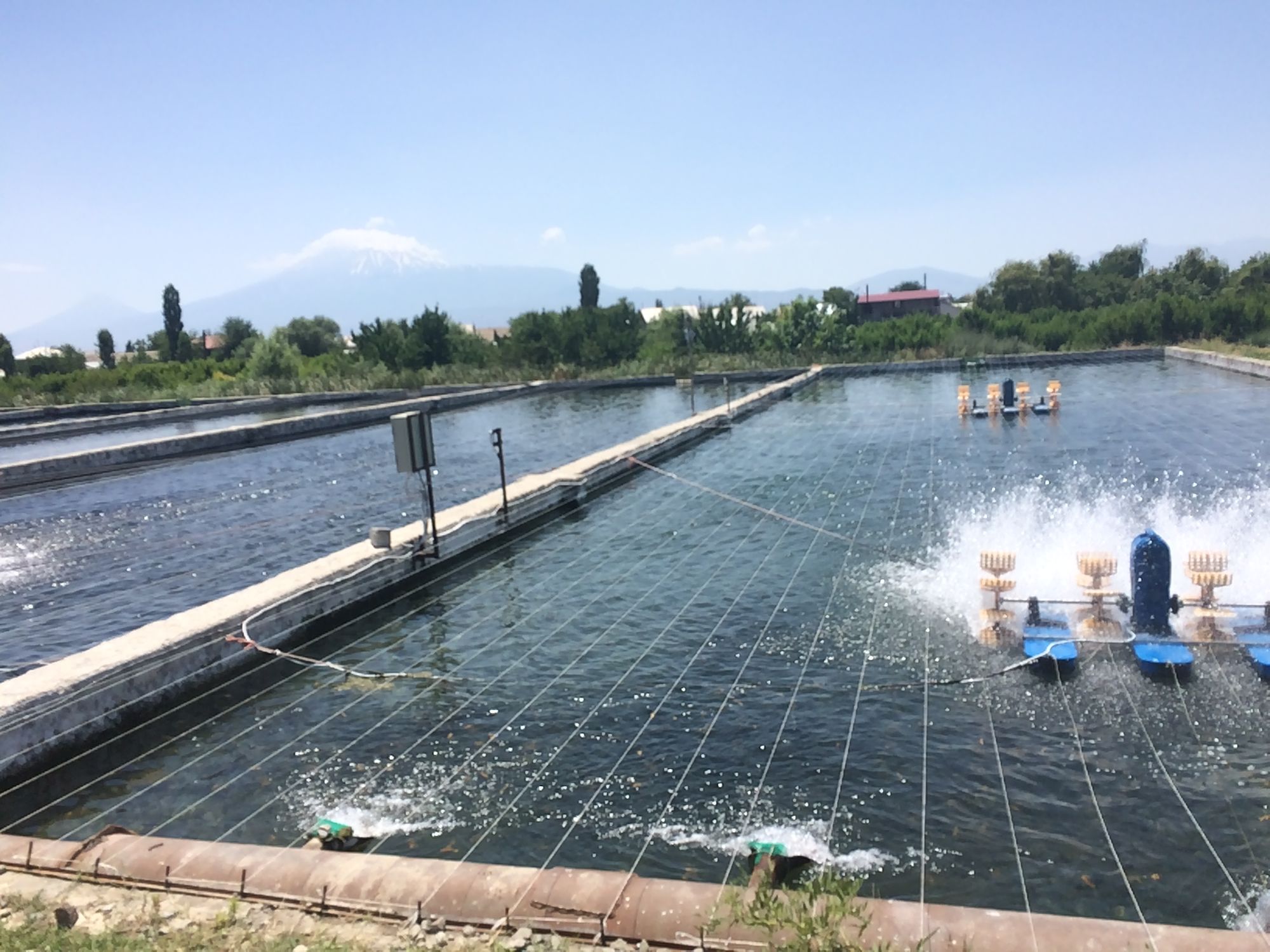
25,000 tonnes of fish a year
About 200 farms sit on artesian wells. Half the fish is exported. The water once reached the fields by itself.
Source: CivilNet, 2024; The Black Sea, 2018 (280 of 319 farms in the valley, 99% on artesian wells).
Use
2.6 billion m³ used in 2024, a record
Share of water use by sector, average 2011 to 2024
- agriculture, forestry and fishing
- water supply 7%
- mining 4%
- manufacturing 1%
- other
From the river to the user, 2024
- abstracted: 3,314 million m³
- losses in transport ranged from 21% to 29% over 2011 to 2024
- 96% of drinking water comes from groundwater
- 2 times less water per 1,000 USD of GDP than in 2011
Sources: Ecoportal Armenia, indicator C3 (Armstat data); Armstat time series (abstraction 2024); World Bank, 2024 (groundwater share).
Irrigation
Up to 70 of every 100 litres never reach the field
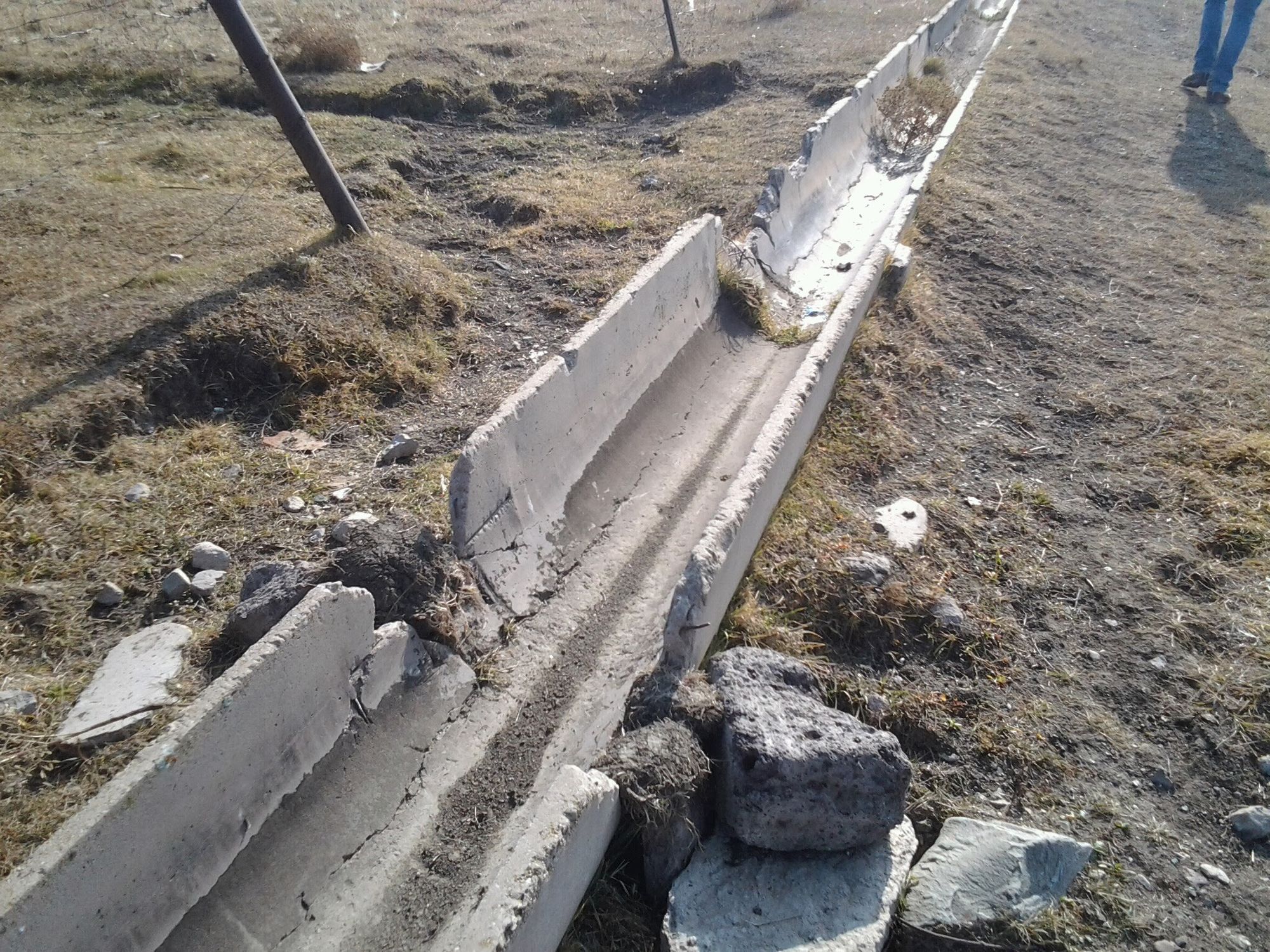
- 20 to 67% lost in the networks of water user associations
- 90% flood irrigation, under 1% drip
- 19.3% of cultivated land is irrigated
- 2007 the last year irrigation tariffs were revised
Sources: World Bank, Armenia water security assessment, 2024; World Bank green taxonomy note, 2026 (20 to 67%); ADB, 2023 and WFP, September 2025 (up to 70%); OECD, 2024 (tariffs).
Drinking water
24 hours for some, 17 for others
- 73% of the population served by Veolia Jur, 2017 to 2031
- 650,000 people in 579 villages outside the contract
- 24% drop in water at the sources, says the operator
- 11 billion AMD of works planned for 2025 to 2026
Sources: ARKA, 25 February 2026 (summer schedule); World Bank, 2024 (75%, 22 hours); EU4GRE baseline report, December 2025 (73%); World Bank press release, 13 June 2025 (650,000); ARKA (investment).
Storage
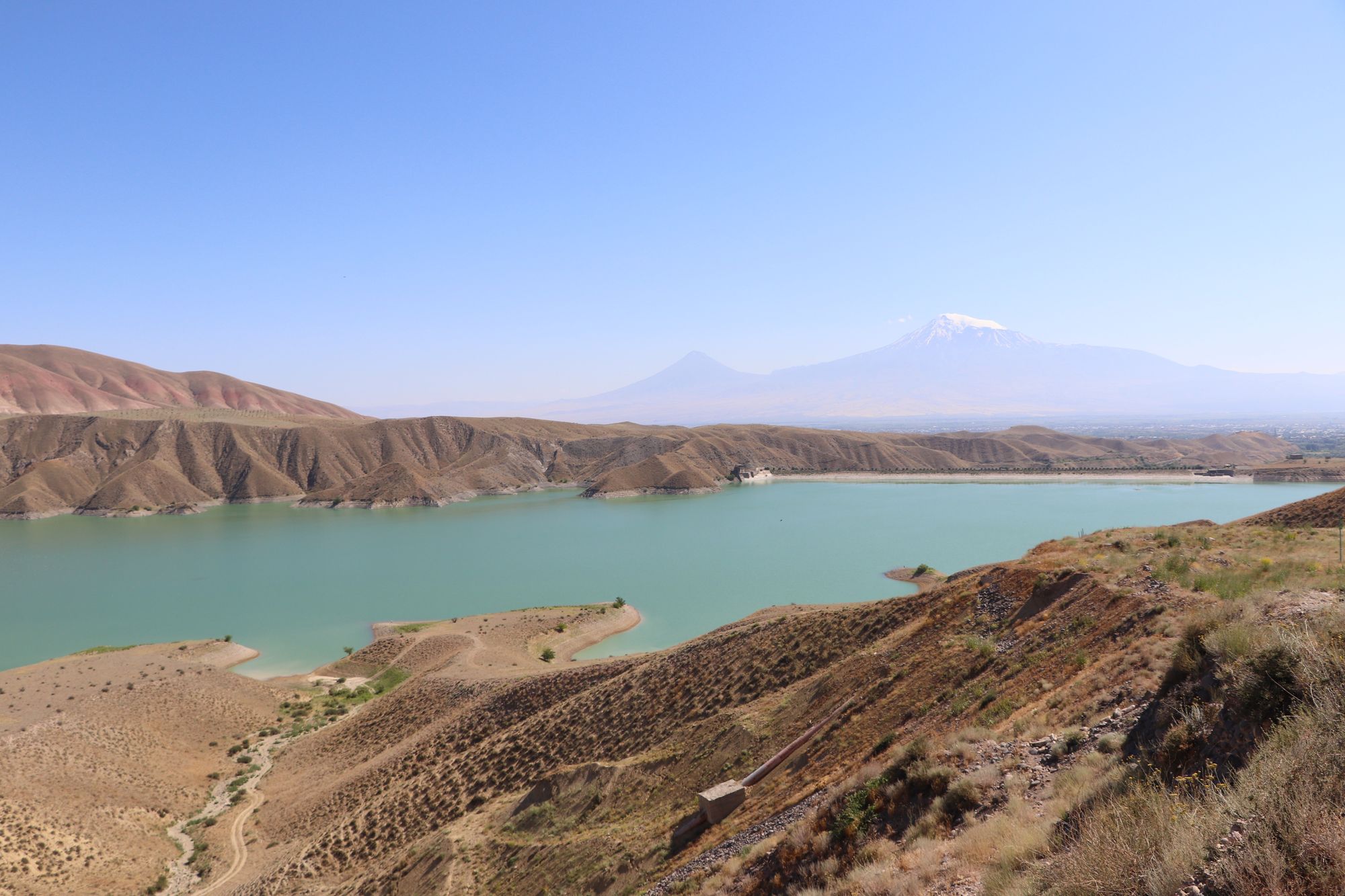
1.1 of 7.5 billion m³ stored
87 reservoirs. Akhuryan alone holds 525 million m³ and is shared with Turkey. Fifteen more are planned; Kaps will hold 60 million m³ for 97.8 million EUR.
Azat reservoir. Sources: Water Committee report, April 2024; World Bank, 2024; EVN Report, 2024; bm.ge, 2023 (KfW financing).
Energy
Electricity from the same water
- about 30% of electricity from hydro in a normal year, less in a dry one
- 190 small hydro plants, 402 MW, in 2024
- 14% of supply from the small plants alone
Sources: Wikipedia, Hydroelectricity in Armenia; International Hydropower Association, Europe profile, 2024; IEA, Armenia energy profile; Water Action Hub (cascade tied to releases).
Climate
Warmer, drier, less river
- +1.23 °C already, 1929 to 2016
- -9% precipitation since 1935
- +33 drought days a year
- -34% inflow to Lake Sevan by 2100
Source: Fourth National Communication of Armenia to the UNFCCC, 2020 (river flow: range of models, 2011 to 2040 down 8 to 13.5%, 2071 to 2100 down 20 to 39%).
Wastewater
8% gets any treatment
- 722 million m³ of wastewater a year
- 6 centralised treatment plants in the country
- 92% of what is treated goes through one plant, Aeratsia in Yerevan, mechanical stage only
- 10.4 million EUR for a new Aeratsia plant, finished in 2016, never switched on
Sources: EU4GRE national baseline report on wastewater treatment, December 2025; Hetq, 2024. The World Bank's broader measure puts safely treated wastewater at 40% (2022).
Investment
Money on the table
| Amount | Programme | Years |
|---|---|---|
| 435 million USD | World Bank, Water and Irrigation Services Enhancement: irrigation, rural water supply, sector reform. First phase 185 million USD with AFD, the EU and the government. | 2025 to 2035 |
| 97.8 million EUR | Kaps reservoir, Shirak: 68.5 million EUR KfW credit, about 17,000 ha of irrigation. | from 2023 |
| 40 billion AMD | Five new reservoirs discussed by the Public Investment Committee. | October 2025 |
| 22.1 billion AMD | Water Committee budget in 2023, without loans and grants, 98% executed. | 2023 |
| 11 billion AMD | Veolia Jur capital works in Yerevan and nearby communities. | 2025 to 2026 |
Bar length is a rough USD equivalent. Since 7 July 2022 the Water Code requires river-basin management.
Sources: World Bank, 13 June 2025; bm.ge, 2023; ARKA, 13 March 2026; Water Committee report, April 2024; ARKA (Veolia Jur); EU4Environment (Water Code).
Part two
Where AI comes in
Same water. Better information, sooner.
AI · satellites
Satellites watch the lake every day
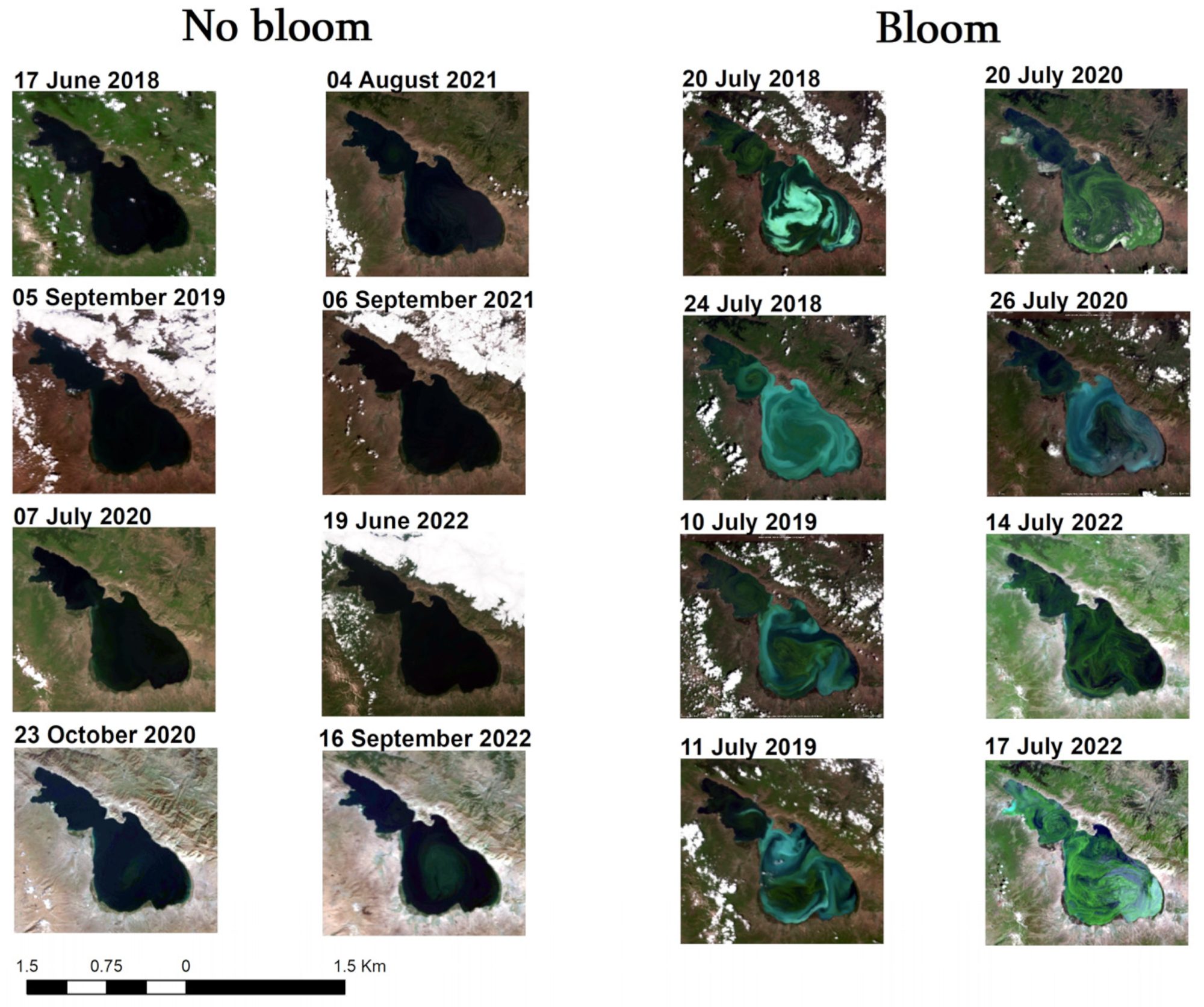
- 700 Sentinel-3 scenes of Sevan, 2016 to 2023
- 95.8% agreement between the automatic bloom classifier and human inspection
- daily satellite passes against monthly boat sampling
- since 1992 free lake-level records from Copernicus radar altimetry
Sources: Heege et al., Satellite-based detection of algal blooms in large alpine Lake Sevan, Remote Sensing 16(19), 2024; Copernicus Land Monitoring Service, lake water level product.
AI · leaks
Finding leaks from orbit and by sound
- 100,000 leaks confirmed by ASTERRA radar satellites since 2017, about 1.4 billion m³ saved
- 800 leaks in 19 weeks at Thames Water, 8.7 million litres a day
ASTERRA: finding leaks with radar satellites and AI
Sources: Xylem (Yorkshire Water, Sheffield; SADM Monterrey, 2025); AWS public sector blog (ASTERRA, 2024); Thames Water, August 2026. Company-reported results.
AI · networks
A digital twin of the pipes
Valencia, Spain: a live model fed by 20,000 readings a day, forecasting the network 24 hours ahead
- 80% of alerts confirmed as real leaks in Singapore, each located within 1 km
- 137 days ahead: pump failures predicted in Barcelona, 70% success
Singapore PUB: a digital twin that flags anomalies
Sources: Idrica, Global Omnium digital twin case study; Bentley Systems, PUB case study, 2024; Water Environment Research, 2024 (Aigües de Barcelona).
AI · fields
Irrigation by data, not by habit
water use against the neighbouring field; grapefruit yield up 14%, alfalfa yield unchanged
- 30 m pixels: OpenET measures evapotranspiration from satellites, 17% error on cropland
- 0 EUR for FAO WaPOR and OpenET data
- 90% of Armenian irrigation is still flooding the furrow
Sources: CropX case studies, 2022 and 2023 (company-reported); Nature Water, 2023 (OpenET accuracy against 152 stations); FAO WaPOR; World Bank, 2024.
AI · forecasts
Seeing floods coming, seven days ahead
- 150+ countries covered by Google Flood Hub
- 2 billion people in the forecast areas
- 7 days ahead for river floods, 24 hours for flash floods
- 0 EUR for the map and the API; the hydrology model is open source
- open data from ECMWF's machine-learning weather model AIFS
Google Research: what Flood Hub does
Sources: Google Research, flood forecasting page and Nature paper, 2024; ECMWF, AIFS open data, 2024.
AI · Armenia
Already happening in Armenia
| 2015 to 2021 | USAID ASPIRED. More than 2,800 wells and springs mapped, real-time meters on the largest fish farms, data straight to the ministry. 135 dead wells found; closing one well at Sipanik saves 1.9 million m³ a year; fish-farm water reused on 40 ha at Hayanist. |
| 2020 to 2025 | EU4Sevan. Hydrological and water-quality models of the lake, a vision to 2050, a decentralised wastewater plant at Noratus. Funded by the EU and Germany, run by GIZ and UNDP. |
| 2022 | Water Code. River-basin management written into law on 7 July 2022. |
| 2025 | ecoportal.am. Open environmental data: water use, losses, lake level, a Sevan dashboard. |
| 2025 to 2031 | World Bank WISE. Sector institutions rebuilt, water user associations reformed, rural supply in six regions. |
Sources: USAID ASPIRED story map; EVN Report, 2017; UNDP Armenia; EU4Environment; Ecoportal Armenia; World Bank, June 2025.
Youth work
What a group can do next week
| Tool | Costs | What you get |
|---|---|---|
| Copernicus Browser, NASA Worldview | nothing | A fresh satellite image of Sevan every few days. Track the bloom and the shoreline yourself. |
| ecoportal.am, Armstat | nothing | Water use, losses and lake level as open tables. Redraw the charts in this deck. |
| Google Flood Hub | nothing | A river forecast for the place you are going. |
| Flow meter on a school tap | under 20 EUR | A week of readings shows where the building leaks. |
| Your own water footprint | a spreadsheet | Litres behind a week of food, clothes and a phone, counted on your data, not a poster. |
Open the live demo: try all five now
These mirror the second half of the course: mapping water with a phone, open data, a micro-audit of a school or home, and comparing results between Poland and Armenia.
Sources and credits
Where the numbers come from
Official and institutional. FAO AQUASTAT, Armenia water resources factsheet. World Bank, Armenia water security assessment, 2024. World Bank, Water and Irrigation Services Enhancement, press release 13 June 2025. OECD, Assessing the enabling conditions for investment in Armenia's water security, ENV/WKP(2024)11. Fourth National Communication of Armenia to the UNFCCC, 2020. Armstat time series and Ecoportal Armenia, indicator C3, 2024. Water Committee activity report, primeminister.am, 4 April 2024. EU4GRE, National baseline assessment report of wastewater treatment in Armenia, December 2025. UNDP Armenia, EU4Sevan. USAID ASPIRED story map. EU4Environment, Water Code amendments, 2022.
Press and research. EVN Report: Abundance of both water and mismanagement (2024), The ups and downs of Lake Sevan, Trying to fill a bottomless well (2017). CivilNet, Massive fish farming threatens Armenia's Ararat Valley water system, 2024. ARKA, 25 February and 13 March 2026. Armenpress, June 2026. Hetq, Yerevan's new wastewater treatment plant, 2024. GRID-Arendal. The Black Sea, 2018. Heege et al., Remote Sensing 16(19) 3734, 2024. Melton et al., Nature Water, 2023 (OpenET). Nearing et al., Nature, 2024 (flood forecasting). Wiley, Water Environment Research, 2024. Case studies by Xylem, Idrica, Bentley, CropX and ASTERRA are company-reported.
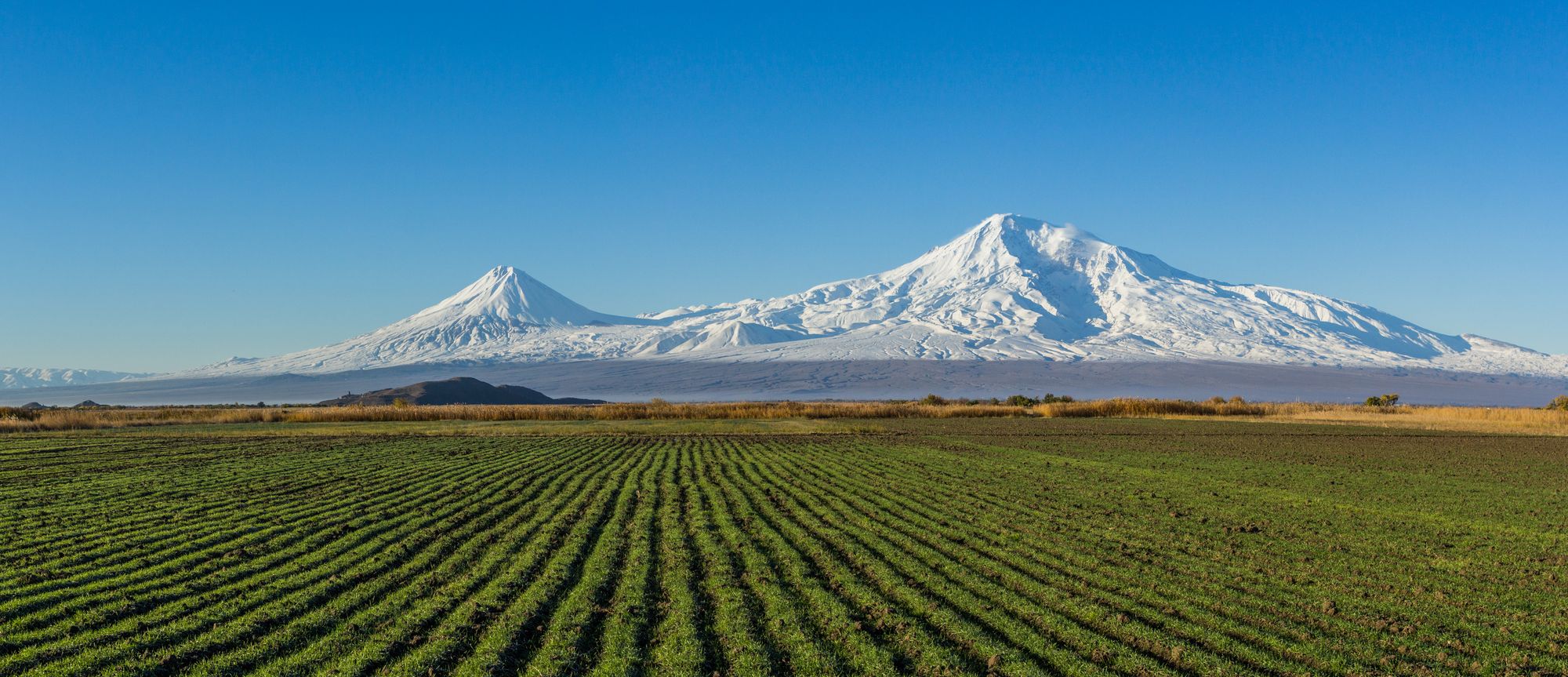
Photos. Xelgen (cover, sunset), Ji-Elle (Debed canyon), Narek75 (fish farm, broken flume), Dav Sargsyan (Azat reservoir), Serouj Ourishian (Ararat plain), all Wikimedia Commons, CC BY-SA 4.0. Lake Sevan from orbit: NASA Worldview, Harmonized Landsat Sentinel-2, public domain. Sentinel-3 bloom scenes: Heege et al. 2024, CC BY 4.0. Films: YouTube channels of the American University of Armenia, CivilNet, ASTERRA, Bentley Systems and Google Research.
Course. Water Management, a training course for youth workers from Poland and Armenia, Yerevan, 11 to 16 September 2026. Organised by Zielone Śląskie with Caucasian Social Innovation Network and the Armenian Institute of International and Security Affairs under the Erasmus+ accreditation of Zielone Śląskie. Research and design: Klaster Innowacji Społecznych, September 2026. Details: zieloneslaskie.pl/projekty/water-management
Co-Funded by the European Union. Views and opinions expressed are however those of the author(s) only and do not necessarily reflect those of the European Union or the Foundation for the Development of the Education System (FRSE). Neither the European Union nor FRSE can be held responsible for them.